Categoría: Our vision

  • Closing and pricing mechanisms in Corporate Transactions: Locked Box or Completion Accounts

    Closing and pricing mechanisms in Corporate Transactions: Locked Box or Completion Accounts


    Within the world of Corporate Finance and in company acquisition processes, it is important to define the moment and the closing methodology of the financial statements that will be used as a reference both for the calculation of the price of the Company and the transfer of responsibilities between the buyer and the seller.

    Below are the two formulas that are commonly used and whose choice can lead to important implications in the final price:

    Locked Box Mechanism

    The Locked Box mechanism supposes taking as a basis a cut-off date of the financial statements prior to the closing of the operation.

    A Locked Box period is set between the reference date and the closing of the operation where the value of the Company is not allowed to leave, therefore, the term refers to the «box being closed».

    It is common that the distribution of dividends, investments of a high amount, or extraordinary expenses are not allowed during the interim period in order not to reduce the cash. Although it is true that, if the normal evolution of the business or the corporate operation requires it, it can be agreed with the buyer to carry them out.

    This closing mechanism requires that the buyer and seller agree in advance which actions can be carried out and which cannot. It must be taken into account that, despite having reached an agreement to purchase the Company, its main shareholders are the sellers and, therefore, the buyers do not have management power.

    If the Locked Box period is prolonged, it can be a risk for both parties since the Company can improve or worsen its evolution, impacting the price.


    Completion Accounts Mechanism

    When the Completion Accounts mechanism is applied, the financial statements used are those of the closing date of the operation, which are prepared after said date.

    This method implies the preparation of a closing estimate and study of provisions, with which the closing of the operation will be carried out. After the closing date, the final financial statements are reviewed and issued, to which the agreed adjustments are applied.

    The agreed adjustments usually involve the valuation multiples, Savings or Net Financial Debt, or significant variations of Working Capital. For this reason, it is important that the forecast used is as accurate as possible, thus avoiding possible significant variations in the final price.

    As a consequence, any price adjustment is not defined until some time after the closing of the operation, when the financial statements are prepared.

    The Completion Account mechanism requires detailed negotiations between the seller and the buyer to stipulate the rules for the preparation and validation of the closing financial statements, with the aim of reducing uncertainty and post-closing disputes of the operation. If necessary, if there are discrepancies, a third party is usually appointed, who in a short period of time and independently, will agree with one or the other of the parties.

    All these mechanisms are regulated in the Purchase Agreement (or SPA) that the parties have previously agreed upon.

    The objective of both systems is to avoid surprises at a delicate moment, since by transferring control of a Company we are also transferring economic rights but also a series of responsibilities and obligations.

    We must take into account both closing and pricing mechanisms so that the corporate operation is a win-win for buyers and sellers. There is no better or worse methodology, simply the optimal one must be used for each operation, as they are all unique.

    The presence of a financial adviser in this type of transaction is the best guarantee of its success and the defense of the interests of the parties involved.


    Javier Navarro Enguídanos, analyst at Vinca Capital

  • Mezzanine debt as a financing instrument

    Mezzanine debt as a financing instrument

    What is Mezzanine debt?

    Mezzanine debt is a hybrid financing instrument, that is, it has the characteristics of a loan (fixed term, interest, and guarantees), and capital (subordinated to bank financing, and the possibility of have property rights and participation in profits). Some examples of mezzanine debt are: senior subordinated debt, and debt convertible into shares.

    Mezzanine debt incorporates a series of clauses that allow debt to be exchanged for capital through options. Generally, this type of debt is presented in the form of a bond with a defined interest and maturity to which is added some form of leveraged or bonus share. This type of leveraged or bonus action can be options, warrants or any type of financial asset with the same characteristics. In practice, mezzanine debt behaves more like equity than debt, because the built-in options make converting debt into equity very attractive.

    Mezzanine debt is frequently associated with acquisitions and buyouts, for which it can be used to prioritize new owners over existing owners in the event of bankruptcy.

    In the order of priority, it is above the Senior debt, and below the Capital, that is, in case of bankruptcy the company will repay the Mezzanine debt with the available resources (if any) after repaying the Senior debt. However, this carries higher returns compared to other types of debt, as it often receives rates between 12% and 20% per year.

    Deuda Mezzanine

    What role does mezzanine debt play in corporate operations?

    It is common for Venture Capital funds to use Mezzanine debt to complete the financing needs in Leverage Buy Out operations.

    For example, a Venture Capital firm wants to acquire a company with debt worth 100 million euros, and obtains a loan that covers 75% of the operation. The Venture Capital firm does not want to put up the remaining 25 million euros of its own capital, so it seeks to finance itself through Mezzanine debt amounting to 15 million euros. In this way, the firm only has to invest 10 million euros of its own capital to be able to carry out the 100 million euro operation. The investor will have the possibility of converting the debt into equity if the previously established requirements are met. If the investment is unsuccessful, the investor will remain as a creditor of the company, and if, on the contrary, it is successful, he will be able to exercise the option and receive shares in the company.

    Mezzanine Debt Advantages and Disadvantages

    The main advantage for the investor is the possibility of obtaining shares of a company in exchange for the borrowed debt. On the other hand, the current shareholders will lose control within the company when the determined requirements are met, and therefore they will sacrifice potential growth performance.
    One of the key aspects to be taken into account by both parties is the interest generated by the Mezzanine debt, which is higher than the senior debt since it has a higher risk.
    In this sense, if the company in question goes bankrupt, the lenders of the Senior debt will be paid first, so if there are no more assets remaining after repaying the senior debt, the Mezzanine debt will not be repaid.

    Finally, Mezzanine debt investors take the same risks as shareholders, but receive a recurring benefit in the form of interest, while shareholders are not guaranteed the benefit through dividends.

    In short, Mezzanine debt is a widely used instrument to complete the debt portion of leveraged corporate transactions. The Venture Capital firm will allow you to undertake the acquisition without having to put up all the necessary capital, and the lender will obtain higher interest rates than those of a Senior debt, having the possibility of converting the debt into company shares.

    Carlos Navarro, analyst at Vinca Capital.

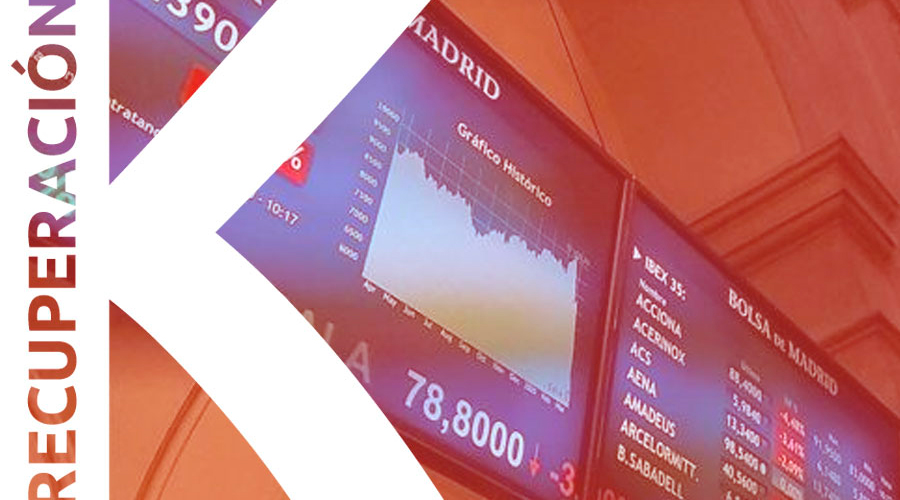
  • This time the recovery will be in the form of a «K»

    This time the recovery will be in the form of a «K»

    During the early days of the coronavirus pandemic, the focus for forecasters was not so much whether the economy would recover, but how which way would you do it.

    The most optimistic analysts expected a «V» shaped recovery, while others foresaw a «swoosh» shaped recovery with a slower.


    Those who believed that the pain was here to stay believed that a long «U» was most likely, and the more bearish were betting long-term bearish trends as of “L”. However, what appears to have occurred is none of the above, but rather a “K” shaped recovery, in which some traditional sectors are in a structural downtrend, as well as consequence of Covid-19 or for any specific reason of the Company.


    The sectors that recover most quickly are technology, pharmaceuticals, online commerce, agriculture and food (which have been essential activities and very resilient to crises). On the other hand, the sectors that will take longer to recover are those related to tourism, travel, hotels, restaurants, small businesses, etc. The real estate sector will also be affected as the trend to work from home will reduce the demand for office space in cities. 25% of shops and bars are going to close their doors permanently, so many commercial premises will be empty. Likewise, the demand for residences with gardens and terraces on the outskirts of cities will increase, while the value of real estate in the center of cities will depreciate as it is less attractive as a habitual residence and as international tourism is reduced.

    For some, the pandemic may have been a great opportunity to power the transformation of the world economy, precipitating the disruptive transformations that were unfolding. They see the pandemic as a catalyst that has accelerated in 5 or 6 years the technological changes that the economy needed, attracting the strong investments that are necessary and in a scenario of abundant cheap money. We have this money because of the action of the Central Banks, which have injected huge amounts of money at a cost close to zero and because of the financial facilities that the Governments have offered to companies and individuals.

    Last week Fed Chairman Jerome Powell announced his intention to maintain zero rates, also reiterating the strategy of linking zero rates to the goals of maximizing employment and allowing inflation higher than 2% in order to compensate for periods of low inflation such as those of recent years. Investors took Powell’s message as an anticipation of more stimulus, so the message was more powerful than any new tool Powell might have announced.

    In some cases things have changed drastically and some companies are realizing that it is not going to be like before. Some examples of areas that are changing drastically: use and demand for Cloud services, growth of telemedicine reserving the physical visit to the doctor for diagnosis and operations, streaming entertainment instead of going to the cinema or theater, etc.

    It is time to reflect on how the environment has changed and adapt our strategy to be able to take advantage of the opportunities and even more, to avoid succumbing to the changes that lie ahead. As Bill Gates says, «We always overestimate the changes that will happen in the next two years, but we underestimate the changes that will come in the next 10 years.»

    Carlos Navarro Enguídanos, analyst at Vinca Capital Corporate Finance

  • Javier Navarro: «We take advantage of the confinement to review the strategy»

    Javier Navarro: «We take advantage of the confinement to review the strategy»

    Javier Navarro, managing partner of Vinca Capital Corporate Finance, is the guest in the new installment that this newspaper launched two months ago, in order to to find out how Valencian financiers have lived through the state of alarm.

    Navarro kindly answered the call from Valencia Plaza to address other aspects such as the performance of the financial markets, the economic recovery and his vision of the so-called ‘new normality’. Here is the talk:

    -How have you been during these months of confinement?
    We have experienced an unusual and complex situation. At first you go into shock, trying to understand the problem; then we go to a phase of adaptation to the limitation of movements; and for a few weeks we have been in the reconstruction phase, as we recover freedoms.

    -And how have you organized yourself to continue at the foot of the canyon?
    -Following very specific guidelines for schedules, food, sports… A little daily self-discipline that has allowed us, despite being confined, to clearly differentiate working time from spending time with family and leisure.

    -How has Vinca Capital responded to the health crisis?
    -We have tried to keep in continuous contact with our customers and partners. Fortunately, today, new technologies allow teleworking and undertaking most tasks in the financial area. In addition, we have taken the opportunity to become part of the team, taking an online course at ESADE on Agile Business, which has allowed us to review our strategic commitment.

    -Have you received many calls during this time, especially after the first weeks with the market crashes?
    -In general, customers have understood the situation and have remained calm. We have issued several analyzes with our opinion on the market situation, which in addition to communicating it to our clients, we have made them public and shared on our website and on social networks.

    -What recommendations have you given them?
    -The measures adopted have been varied: we have increased liquidity a little, we have increased exposure to sectors with little exposure to covid-19, such as the technology sector and the pharmaceutical sector; We have sold futures on the Ibex to partially cover the portfolios. At no time have we made crazy sales, because we trust the quality of our analysis system. We have also taken advantage of some opportunities, for example, we doubled our bet on MásMóvil a couple of weeks before the takeover bid for KKR, Providence and Cinven was announced. We have also modified the prospectus of the investment fund Fundamental Approach Spain to make it international.

    -Where are the declines in the stock market going to stop after the measures adopted by the big central banks?
    -The declines have already stopped weeks ago. In the case of the S&P 500 we have experienced the fastest decline in history, followed by the fastest recovery. It is the first time since the crash of 29 that 85% of the drop has been recovered in less than 80 days. The Nasdaq offers positive returns of +10% for the year and the S&P 500 is positive. The European markets, somewhat lagging behind, offer very good opportunities.

    -Do you see a strong economic recovery once the ‘coronavirus effect’ passes?
    -Depends on countries. In the United States the recovery is being brilliant: a ‘V’ clearly. The published macroeconomic data has surprised positively, with the creation of 2.5 million jobs in the month of May, the rebound in manufacturing production and an increase of 18% in retail sales.

    -And the economic recovery in Europe?
    -It will be quite fast in the form of a ‘U’ to put a simile), but we have to say that Spain will be one of the countries that will find it hardest to recover. We expect Spanish GDP in 2020 to be -9.6%, unemployment to reach 21% and the public deficit 11.1%. We will not fully recover until the end of 2022 and much depends on the measures taken by the Government.

    -What awaits us in the ‘new normal’?
    -In Spain, unfortunately, we are going to find a greater intervention of the public sector, more regulation of economic activity, greater social conflict and an increase in all kinds of taxes. Fortunately, the financial sector is being part of the solution, unlike the 2008 crisis.

    -And

  • What are Carve-Outs? Has your time come?

    What are Carve-Outs? Has your time come?

    The outbreak of Covid-19 and the measures adopted to control it have drawn a new economic scenario and have led to a review of the business plans designed for these years.

    Companies have abandoned their growth objectives and have focused on survival, with liquidity and funding being the main focus of attention. The fall in demand has meant, for most sectors, a drastic reduction in revenues in the short term and little visibility of them in the medium term. Companies have focused on working capital management, cost reduction and financial leverage, often through ICO loans.

    In this new economic environment, Carve-Outs are considered a very interesting alternative for Companies. The Carve-Outs consist of the segregation of business units, non-core investees or non-core assets of the parent company. The divestment and monetization of assets allows the Companies to focus on their main activity and allocate said resources to reduce debt or CapEx.

    These industrial divestments respond to four strategies:

    1. Give visibility to the value of an Asset
    2. The need to deleverage the Company
    3. Get rid of a business with little strategic fit
    4. Growth opportunity with a new partner

    Carve-Outs not only make economic sense, but also strategic since they allow the management team to focus on the main business areas. These operations are usually carried out by large multinational companies that decide to focus on more operational markets and businesses. It is also a natural tendency in certain companies such as Sacyr, ACS or Ferrovial to rotate the portfolio within their strategy of disposing of mature businesses.

    They have been a common practice in sectors such as Telecommunications, where infrastructure owners have appeared that sublet assets to mobile operators, allowing the latter an increase in CapEx for the arrival of 5G . The financial sector has been another of the protagonists, banks have sold portfolios of non-performing loans, asset managers, and investees in the real estate sector to focus on purely banking activity.

    In the sectors most affected by the crisis (tourism, restaurants, automobiles, leisure) there will be an accelerated concentration, so there will be more mergers and divestments than usual. These disinvestment processes are going to be a window of opportunity for Venture Capital.

    The cash needs of the Companies coincide at a time when the Private Equity funds have 4,000 million Euros of “dry powder” – money committed and ready to be invested. Almost 70% of corporate operations are carried out by this type of managers. That is why the Venture Capital industry is considered as part of the solution to the new economic scenario.

    By Javier Navarro Enguídanos, Analyst at Vinca Capital Corporate Finance

  • What are Drag Along and Tag Along Clauses?

    What are Drag Along and Tag Along Clauses?

    These are two really important clauses since they are negotiated before making a business investment and allow conflicts to be avoided at the time of divestment or possible exit of the partners. Today they are very common in the Partner Agreements of start ups and in M&A processes. They are very practical for the future development of a Company and are used by both investors and entrepreneurs.
    Both clauses imply a restriction on the free transfer of shares or partnership interests and are not expressly included in Spanish mercantile legislation since their origin is in the world of Venture Capital in the United States and their wording it is usually reserved for the Partners Agreement, in which the agreements of the parties are specifically expressed. On some occasion they transcend the Articles of Association; in this case they will become binding for all partners.

    The Drag Along clause (right to drag) protects majority partners and, as its name suggests, forces minority shareholders to sell in in case the majority shareholder has a purchase offer for all the shares of the Company. This clause gives the majority shareholder the right to negotiate the sale of 100% of the company, which allows it to reach a more attractive price, without a minority shareholder being able to oppose or hinder the sale. This clause is usually defined with a minimum price, a period of time to exercise this right, and can give the option to the remaining partners to match the offer of a third party.

    The Tag Along clause is intended to protect minority partners in a way that gives them the right to sell their participation under the same conditions as the majority or reference partners. In this way, it is avoided that a new majority shareholder gains access to the Company, until now outside the business, without offering an exit or the possibility of disassociation to the minority shareholders. It is therefore an obligation for the buyer if he wants to continue with the operation. In the event that the buyer does not wish to acquire all the shares or participations, the offer is usually distributed proportionally among the percentage of the share capital of the partners who have decided to accept it.

    As a conclusion, it is essential to know the intention and meaning of both clauses since they have become two points that frequently have to be negotiated in the Sale and Purchase Agreement (SPA). Therefore, it is essential more than ever to have adequate advice in defense of our interests.

  • Challenges of the new business reality

    Challenges of the new business reality

    Last year was one of economic growth and job creation. Until recently, the outlook for 2020 was one of consolidation of corporate profits and continuity in terms of growth.

    At the beginning of March all the forecasts suddenly changed, the Coronavirus arrived in Europe. The events are known by all, the state of alarm is activated in Spain and many other countries, which results in an almost total paralysis of economic activity and a restriction of mobility.
    Faced with the fall in demand, companies were forced to stop production, lay off employees and adapt their costs to an uncertain situation of minimum income.

    Governments and Central Banks reacted quickly with proposals for monetary and fiscal stimuli, facilitating access to credit and liquidity.

    Today we are facing the reopening phase of the activity and the socio-economic changes that have arisen as a result of the measures to contain the pandemic. We find ourselves in a new reality of the markets after the destruction of part of the productive fabric (supply) and a reduction in disposable income (demand); which will result in a different environment: more digital, less global and more indebted.

    Funcas’ latest forecasts for Spain point to a drop in GDP of -7% for this year. It will be followed by a strong economic rebound in 2021; however, not everything lost as a result of the crisis, called the Great Lockdown by the IMF, will be recovered.

    Challenges of the new business reality

    Another key element facing the Spanish economy is the unemployment rate, which may exceed 20% at the end of 2020 and more than 22% if ERTEs are taken into account.< /p>
    Challenges of the new business reality

    We will face new scenarios that are presented as a blank sheet of paper. It is in the hands of businessmen to emerge stronger from this situation, focusing on it as an opportunity and not as a weakness. We must be resilient, have a future perspective and take the necessary measures for survival in an agile way.
    Good companies are already taking steps to come out of this crisis stronger, such as:

    • Professionalization of the company; it is a great opportunity to strengthen human capital by hiring competent personnel.
    • Divestment; sale of non-core assets that allow the company to focus its resources on the main activity and generate liquidity.
    • Strategic partners; incorporate new partners that strengthen the Balance and add value to management.
    • Inorganic growth; consolidate the position in the sector taking advantage of the opportunity of acquisitions at more adjusted valuations.
    • Digitalization; the company’s digital transformation is accelerated.
    • Geographical growth; search for demand in geographical areas with the greatest growth, such as Asia. For example, China and India will be the exception and will not enter a recession in 2020.


    To summarize, at Vinca Capital we think that we must clearly differentiate the measures that we should have taken at the time of the outbreak of the crisis from those that we must take now in the post-crisis phase. In the crisis stage, we experienced an initial shock in which the urgency in decision-making and the measures to preserve the liquidity on which the survival of our business depended prevailed.

    We are now entering the post-crisis phase, where our tactical and strategic movements must give us a projection from which we can come out stronger.

  • Coronavirus and financial markets… will we get out of this?

    Coronavirus and financial markets… will we get out of this?

    The Valencian financier hopes that the pandemic will be controlled between April and May, with a gradual normalization in the summer months.

    The coronavirus crisis and the containment measures applied are having a significant impact on the world economy. The confinement and the ‘slow’ economic activity result in a demand shock that impacts all sectors.

    The markets in general, and the Ibex 35 index in particular, register drops close to 30% in 2020. Stock markets often anticipate and overreact to events. As a result, we must pay special attention to the virus containment data and possible advances in health: diagnostic equipment, effective medicines as well as the development of a vaccine.

    We have faced one of the fastest stock market crashes in history and given the current volatility of the markets we believe that the time to enter with purchases will be when the signs are given effective control of the virus.

    The coronavirus spreads extremely easily. In 80% of cases they are mild or moderate infections and can be cured at home; In 14% of cases, you have to go to the hospital since the infection is severe and in 6% they are serious cases that end up in the ICU.

    Serious incidents by country:

    Its economic impact

    Despite the uncertainty and the difficulty in knowing the exact effect of the pandemic on the economy, we think that we are already in a recession since the national GDP will fall by -9.7% in the first semester of 2020; this will be followed by a sharp rebound during the second half as output normalizes. For the year as a whole, GDP will contract by 4%. However, we must be aware that this is a one-off crisis limited in time; we are confident that we will have the first signs of recovery in the second part of this year, which will be followed by a pronounced growth in 2021 (+3%) and culminating in a full recovery in the first half of 2022.

    The impact on employment will be large as 1.7 million people will lose their jobs in Spain, placing the unemployment rate at 22%. We expect the results of the Companies to deteriorate by -25% in 2020. There are already many companies that have canceled their dividends, their share repurchase plans, as well as their investment plans. ‘Cash is the King, because you have to save the cash in anticipation of liquidity needs in the coming months. We must clearly differentiate temporary losses, a direct consequence of the pandemic, from permanent losses. Nor are all sectors affected equally. Among the most affected are the tourism, hotel, catering, airlines, etc.; that can give the summer season for lost in large part.

    Some less penalized sectors are agriculture, the pharmaceutical sector, technology… After the collapse the recovery will come but obviously not at the same speed as the fall. In any case to see the controlled situation in Europe there are still months. Tomorrow, Thursday, we will be able to begin to test the economic damage suffered by Spain with real figures, since the employment data for the month of March are published. At the moment, the CEOE surveys show a forecast of a 50% drop in sales.

    Fiscal and monetary measures

    Central banks and governments have reacted quickly with the largest battery of stimuli ever proposed, facilitating access to credit and flooding the market with liquidity. In Spain, several measures have been adopted, such as:

    • The ICO will grant guarantees of up to 100,000 million euros to facilitate the granting of loans to companies and the self-employed.
    • The procedure for Temporary Employment Regulation Files (ERTE) has been simplified.
    • Exemption in the payment of social contributions for workers subject to ERTE.

    For its part, the ECB has approved the PEPP (Pandemic Emergency Purchase Program)

  • What are “Phantom Shares” and what are they for?

    What are “Phantom Shares” and what are they for?

    By Javier Navarro Casanova. Managing Partner of VINCA CAPITAL

    It is a formula widely used lately by some high-growth or family companies to encourage, attract and retain collaborators and key people in the development of the Company. It consists of granting an economic right, not a political one, whose objective is to align the interests of directors and employees with those of the shareholders.

    The conditions and method of collecting the phantom shares will be defined by a detailed plan that the company will have defined and which will contain at least: who are the beneficiaries, the liquidity events of the right, the vesting or period of permanence during which these rights will be consolidated and how to value them.

    When the moment of payment arrives, the beneficiaries receive a bonus calculated by the difference in value of the Company’s shares between the moment they were delivered and the date of exercise.

    The advantage over another system such as stock options is that the beneficiary does not acquire the status of partner, does not obtain political rights, and therefore cannot hinder the adoption of relevant agreements at the share level. Shareholders Meeting.

    Furthermore, the stock options system implies an economic outlay by the beneficiary to be able to buy the shares. In the phantom there is no type of disbursement by the collaborator.

    Both remuneration systems also serve to minimize initial costs and that part of the salary or variable remuneration is accrued based on the evolution of the Company.

    This is an unregulated figure, so there is total flexibility for its configuration, although we recommend that the Plan be formulated by the Board of Directors and approved by the Shareholders’ Meeting.

  • Javier Navarro, founding partner of Vinca Capital, analyzes at Plaza Financiera, presented by Luis A. Torralba

    Javier Navarro, founding partner of Vinca Capital, analyzes at Plaza Financiera, presented by Luis A. Torralba

    Javier Navarro, founding partner of Vinca Capital, and Alejandro Martínez, managing partner of EFE &amp ; ENE Multifamily Office, analyze in this new installment of Plaza Financiera, which presents Luis A. Torralba, everything that moves around the ‘corporate finance‘ or ‘corporate finance’, a financial segment that for some time now is moving -and a lot- not only in Spain but in the Valencian Community. Just take a look, to give an example of how the ceramic sector has changed to get an idea.

    To talk aboutcorporate financeis to talk about the strategic decisions that are adopted around a company to make it grow through different ways such as the purchase/sale, financing of working capital, financial restructuring and/or the search for new partners, among other aspects.

    You can access the news clicking here